
The AI wrapper epidemic
Most AI claims in pitchdecks don't hold up. After 100+ tech DDs and 1000+ decks reviewed, the patterns are always the same.
I still read pitchdecks every week — it’s part of the job, and lately it’s louder. Since ChatGPT, “AI” is on every slide, but the technical reality behind the claim is often thin. If you’ve sat through an IC in the last two years, you’ve already seen the same disconnect: big story, small evidence. After more than a hundred real tech due diligences and well over a thousand decks reviewed, I don’t get surprised often; I get tired of the same shortcuts. They repeat across ClimateTech, HealthTech, FinTech, SaaS — different sectors, identical tells.
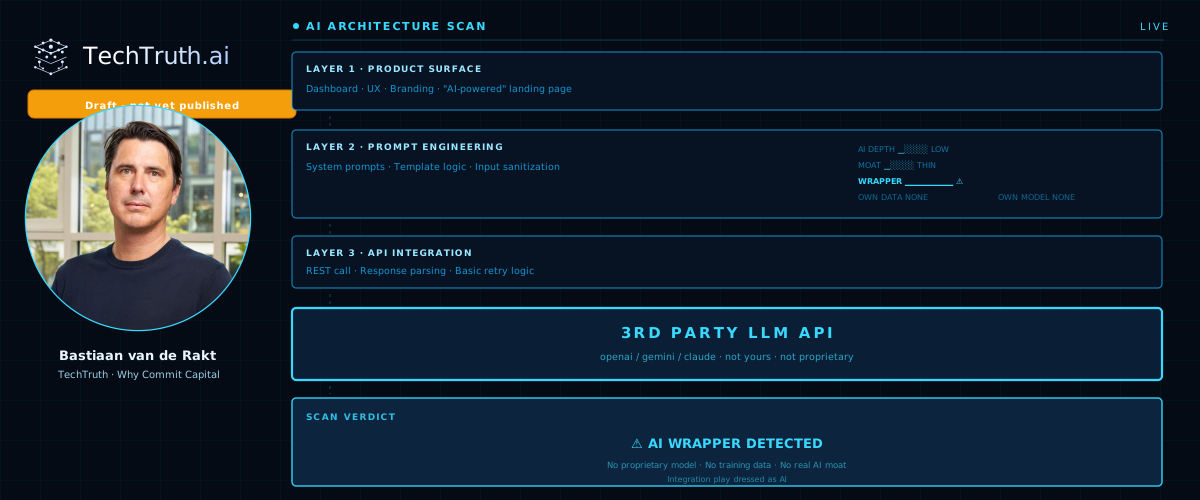
The API wrapper dressed as proprietary AI. Sometimes the whole “AI” story is a thin product layer on top of someone else’s model. Call it what it is: an integration play. That can win — speed to market, UX, distribution — but it’s not equivalent to owning models, training pipelines, or proprietary ground truth. When founders blur that line, investors who can’t read code reward the wrong thing.
The founder who “built AI” but can’t explain the training data. I always ask where data and labels come from, who has rights to them, and what degrades first when the world shifts. Good founders answer clearly; the rest sound like they’re reciting a press release. If you can’t explain the data story, you don’t get to claim the intelligence story.
The architecture diagram that shows ML everywhere but no human oversight anywhere. I love a crisp diagram — until it pretends machines run alone. In production, models drift, fail quietly, and hurt people at the edges. You need humans in the loop, review paths, rollback, logging, ownership. A deck that skips oversight isn’t visionary; it’s incomplete.
European VCs are flooded with AI claims, and most partnerships don’t have the bandwidth to falsify them quickly. That’s uncomfortable in any market; in Europe it’s sharper because regulation isn’t abstract. The EU AI Act pushes teams toward documentation, risk management, and human oversight for real — not slide-deck theater. Weak technical claims age badly when the rules catch up. If you can’t separate signal from noise, you’re not just missing alpha — you’re underwriting risk you can’t name.
I co-founded Deeploy because runtime governance is where AI lives or dies once you leave the lab. At Enjins we care about ML that ships and keeps shipping — not decks that impress for twenty minutes. I invest through Why Commit Capital and serve as Operating Partner at Volve Capital and Venture Partner at Aenu because returns follow truth more reliably than buzz. I’m not trying to dunk on founders — most are sincere. I’m asking us, as investors, to raise the bar. We can do better than applauding wrappers — and we should.